Producers Blog
Why You Should Consider Corn and Soybean Seed Treatments
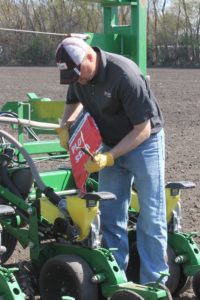 Before growers finalize their seed decisions, it is important to consider seed treatments. What benefits could you gain from the addition of a seed treatment? Consider plant health, root health, emergence, insect and disease control, stress resistance and higher yields – and that’s just a few of the benefits. While seed treatments can’t solve all pest problems, they are a management tool that many growers have put to good use on their farms. Today there are fungicides, insecticides, nematacides and biologicals all available to protect corn and soybeans. Let’s look at those in a little more detail.
Fungicides
Growers are planting earlier in order to realize today’s newest genetics highest yield potential. They are also planting into more residue as we have seen a shift to more reduced tillage and no-till practices put into place. Planting earlier and into more residue tends to lead to soil conditions that are sometimes cooler and/or wetter than ideal planting conditions. Those conditions tend to favor many different diseases, including Pythium, Fusarium, Phytophthora and Rhizoctonia. One of the best ways – and sometimes it’s the only way – to control those diseases is through the use a seed-applied fungicide. Because we never know which disease may thrive and infect our plants, it is also best to use a fungicide with multiple modes of action to control multiple diseases. Both corn and soybean fungicide treatments have proven that they can improve plant stand, vigor and yield, especially when planted into stressful conditions.
Insecticides
Early season insects and ‘secondary insects’ can be controlled with an insecticidal seed treatment. In soybeans, there are insecticidal seed treatments that are labeled for Bean Leaf Beetle (BLB). By controlling the BLB early with a seed treatment you are also reducing the incidence of Bean Pod Mottle Virus (BPMV). By reducing BPMV, you are also increasing the grain quality and seed appearance. Soybean seed insecticide treatments have shown a great response in those fields with a history of early BLB infestations. The seed-applied insecticides for corn can control seedcorn maggot, wireworm, flea beetle and other pests. All of our SmartStax® corn products come with the seed applied insecticide Poncho® 500 from Bayer CropScience for control of those secondary pests. However, you should also consider adding them to your other seed corn if you have a history of secondary pests in the fields you will be planting this year. Not only can those insects reduce your stand, they can also open up the plants that survived for increased disease pressure and lower stress tolerance.
Nematicides
The seed treatments for corn and soybeans to control nematodes are fairly new to the market. Before having them applied to your seed, it is best to test your soil and roots for nematodes. Since nematodes can be distributed very irregularly within a field, consider collecting several composite samples to get an accurate population estimate and then refer to university recommendations for treatment thresholds. All of our SmartStax corn has VOTiVO® applied to the seed. VOTiVO is a biological seed treatment offered by Bayer CropScience that is labeled for control of nematodes in corn and soybeans.
Biologicals
That leads us right into the biological seed treatments, which are very new to the market. They seem to be all the rage today with claims of nematode control, increased fertility uptake, drought tolerance, insect control and many other claims. While some of these products are very good and work great, such as VOTiVO, there are many that may not work nearly as well. Before using a biological seed treatment on every acre, investigate their claims and look at the data. Then, if you think it’s a good product that would work in your operation, give it a try on a few bags or acres with some side-by-side testing on your own farm.
Things to Remember:
- Fungicide seed treatments benefit growers by helping to reduce disease pressures from earlier plantings, cool soils and wet soils. Reduced disease pressures help to improve stand establishment and, ultimately, protect yield.
- Seed-applied treatments for insects can help both corn and soybeans. The best response in soybeans has been in fields with a history of early BLB pressure. In corn, SmartStax products already have a seed-applied insecticide, but you can add it to most other corn seed as well.
- Nematicide seed treatments are fairly new to the market. However, they have shown a great yield response in most cases.
- Biological seed treatments are all the rage. Before using them, do your homework and research each product. Then put them into a small side-by-side test on your own farm.
If you have further questions about seed treatments and what specifically Producers Hybrids has to offer, please contact your local dealer, District Sales Manager or Agronomist for more details.
Agronomy | Corn | Performance | Products | Soybeans | Yields