Producers Blog
Rootless Corn Syndrome: Causes, Solutions and Results
Each year, our agronomists focus on a special project – here’s a look some of their findings in 2017.
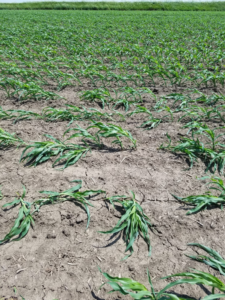 In many portions of western Iowa this year we had a cool, wet start to the spring planting season. This meant that much of the early planted corn either laid in cool, damp soils for a long period of time or we planted the seed in to cool, damp soils. Then the rain stopped, or was very scattered, as June started and we had two weeks of mostly dry, sunny and windy conditions. On June 12th my phone started ringing about corn that was falling over, or laying down, after the windy weekend. I had noticed the rootless corn syndrome – or “floppy corn” – occurring the previous week in a P3 plot near Schaller, which was close to where many of the first calls came from. There were several questions that came from growers about what caused this, why is it only in some areas of the field, how do I fix it and will the corn survive and produce an ear. I will address those questions and provide you some examples of what the year-end results were for those plants that showed signs of rootless corn syndrome.
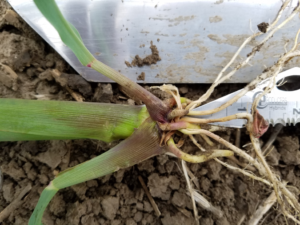
Notice the shallow planting depth. While some nodal roots are growing, just above the tip of the knife is a desiccated nodal root.
How does it happen?
The two most common causes of rootless corn syndrome are related to weather and/or planting. If the corn is planted too shallow (less than 1.5 inches) to start off with, the nodal roots may be trying to develop too close to the surface. The soil surface had dried out after two weeks of sun and wind. Also, while the corn may have been planted at 2” deep, the soft soil may have settled or eroded away after a heavy rain event. There were also cases where the field wasn’t dry enough to be planted and there was sidewall smearing. This created a layer of compaction that the roots couldn’t grow through and, once the soil surface dried, the seed furrow opened. When nodal roots don’t reach moisture they will desiccate, stop elongating and die. During the next windy day, the corn will become “floppy” or can just lay down.
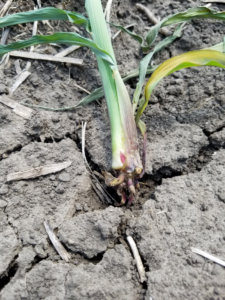
A plant with rootless corn syndrome and desiccated nodal roots.
Why is it only in some areas?
The reason rootless corn syndrome may only be in portions of the field is most likely caused by soil types, field conditions at planting and weather. Most planters were set correctly for most of the field and most of the soils were probably dry enough for planting. However, the portions of the fields that have higher clay content soils may have been a little too damp yet and this caused some sidewall smearing. There were also areas of the field that were cloddy from being worked too wet, as well as other areas that were very soft, or fluffy. These field conditions caused issues with planting depth, which resulted in the nodal roots trying to develop in dry soil conditions near the surface. When the reports started to come in, we had just gone through multiple days of very warm and windy conditions, as well as two weeks of dry weather.
Can it be fixed?
Unfortunately, there is not much a grower can do to fix the problem once it occurs. The best thing that could happen would be a soaking rain. If the corn is still mostly upright, a cultivation that throws some soil around the base of the plant may help for a little while. The nodal roots will still need moisture to grow into and, unless it rains, they will still have dry soils around them. If the corn is lying flat on the ground, the mesocotyl may be broken. This would mean the corn plant will most likely die since its only food source has been cut off.
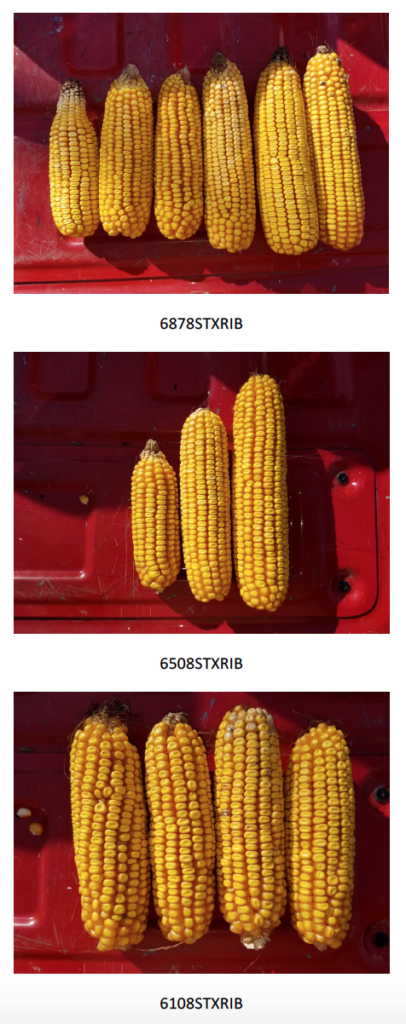
Plot findings
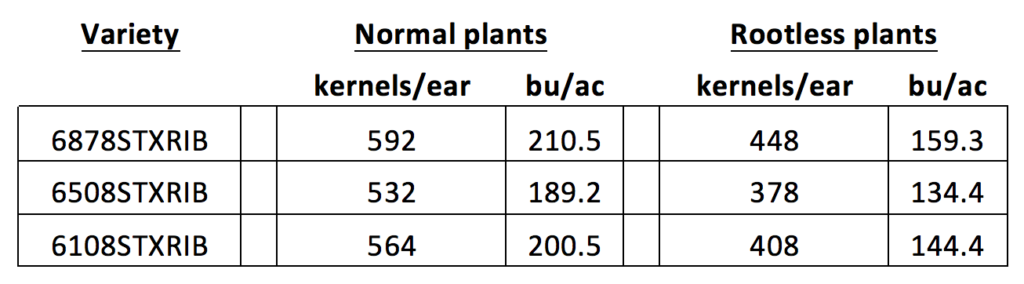
At the P3 plot near Schaller, I did flag plants in three different varieties that had the rootless corn syndrome and follow them until harvest. The hybrids I followed were 6878STXRIB, 6508STXRIB and 6108STXRIB. All three hybrids did produce an ear on each of the plants I had flagged. Since the rootless corn syndrome was not on every plant, I was not able to take any yields. However, I did do kernel counts on three good plants and three plants that were flagged for rootless corn syndrome. Using 90k kernels per bu and 32k plants per acre, I converted the kernels/ear to bushels/acre.
Final thoughts
As you can see, there was a yield loss from all the samples that had rootless corn syndrome. While this is only one sample from one site, it does show how significant the yield loss can be.
There are a couple things to remember before planting your corn in 2018 to help you try and avoid rootless corn syndrome from showing up in your fields:
- Shallow planting (less than 1.5 inches) leads to a much higher risk for rootless corn than deep planting (more than 2 inches).
- Soils conditions when working and planting fields can increase your chances, as well. Avoid creating cloddy or fluffy soils when working fields before planting. And make sure your soils are dry enough at planting so that you do not create sidewall smearing.
Other questions or concerns about rootless corn syndrome? Reach out to your District Sales Manager or local sales agronomist.