Producers Blog
A Look at Kansas Late-Planted Corn
Each year, our agronomists focus on a special project – here’s a look some of their findings in 2017.
For the Kansas region, the 2017 planting season was definitely a season of shifting. With rainfall averages just under 1” of rain a week from the middle of April until the 1st of June, original plans were changed when it came time to plant plots. What was supposed to be three locations with dryland population studies was turned into two locations of double crop corn behind wheat.
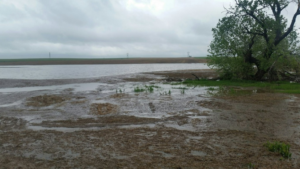
A population study that was planted but got flooded out.
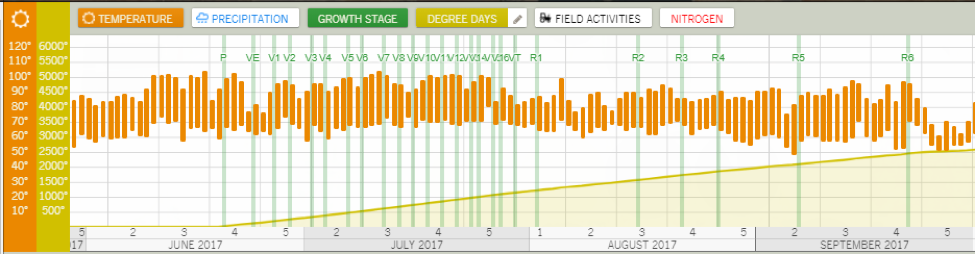
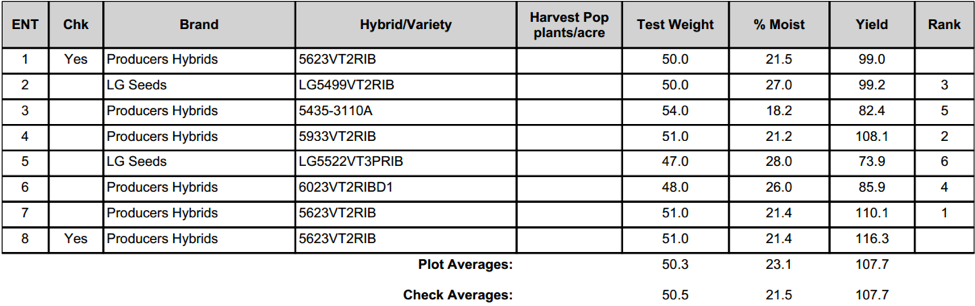
Both double crop plots were planted at 24,000 population. The first plot was planted at Kismet, KS on June 20th. The second plot was planted June 29th near Johnson City, KS. Due to the later planting time and higher elevation nothing over 104-day was planted at Johnson City. As the crow flies, these locations are only about 80 miles apart but the Johnson City location is 700 feet higher in elevation. Both locations were irrigated and planted to Producers Hybrids 5623VT2PRIB. Using the Growth Stage prediction tool gave us a general idea of when we would reach black layer (R6) and WeatherTrends360 gained us the first frost dates, which were both in mid-late October. This information for both locations was similar to Kansas State Universities predictions charts.
Harvest on the Kismet plot was November 10th and Johnson City was November 17th. As seen in the plot averages on the charts below, moisture was considerably higher on average at Johnson City even though Kismet had considerably longer products in the plot. A few factors played into this:
- The Kismet location had all the straw baled off of it prior to planting while Johnson City was planted with all the residue still remaining.
- Another factor was soil type. The Johnson City location is mainly a silty loam while Kismet is a sandy loam.
Both of these factors slowed down emergence at Johnson City, which attributed to the higher moistures.
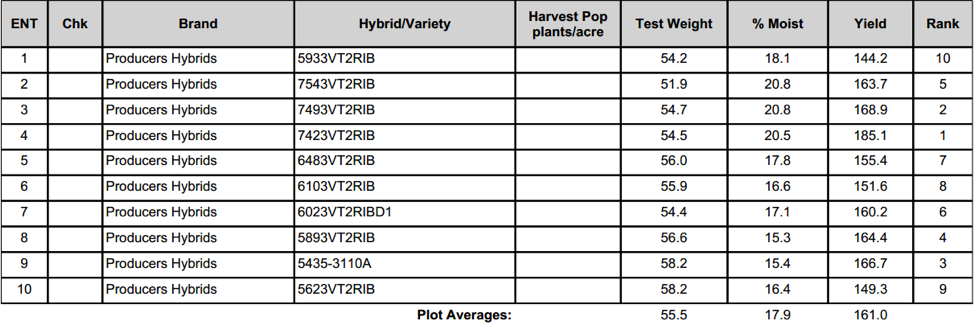
Stand was also affected by the heavier residue and most hybrids were closer to final stands of 18,000 plants per acres. This gave products like 5623VT2PRIB the chance to tiller and have multiple ears. The picture below is in an area that the space between plants was close to 18 inches.
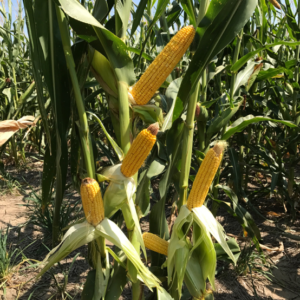
Some other interesting factors came up through the growing season that weren’t necessarily issues for the full-season corn fields in the area. The Kismet plot had a P3 plot planted one mile away with some of the same hybrids. The leaf disease pressure was lower in the full-season plot, with Southern rust being the main disease present. Both plots had above average earworm pressure, which in turn affected the test weight. None of the trait packages used give any protection from earworm; when planning next year’s plot set we will likely use a few AgrisureViptera® traited products to see if the earworm control factors into higher yields and better grain quality.
In conclusion, a hybrid recommendation based off these two plots still comes down to local knowledge. Unless there is a market for high-moisture corn or a grain drier close by, the shorter maturity corn hybrids will likely be the best bet of reaching a good harvest moisture in time. Residue management is very important when fighting wheat stubble. A few days difference in emergence could mean a big difference at harvest in moisture. Prudent scouting for late-season insects and diseases is more important in double crop corn than it is for full season corn. Using extension information and tools such as Advantage Acre® can really help in deciding what maturity to plant. While the plots for 2017 didn’t go as originally planned there was still a lot learned about the great performing Producers Hybrids products.
Questions? Contact me at eric.klein@producershybrids.com or reach out to the sales agronomist in your area.