Producers Blog
How to Manage Early Season Corn & Soybean Seedling Diseases
Early establishment of an even stand of corn and soybeans is crucial to achieving the highest yields for both crops. One of the many problems that can cause reduced stands and uneven emergence is seedling diseases. Scouting your fields for the first couple of weeks after planting is important to evaluate your stands and discover any problems, including seedling diseases. When a problem arises, it is important to determine if the problem was caused by disease, insects, herbicide, compaction or some other cause. Diagnosing the problem now helps with future management decisions to prevent problems from reoccurring.
Causes of seedling diseases
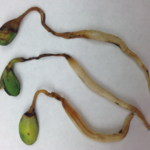
Pythium
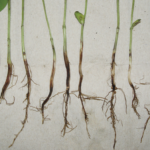
Fusarium
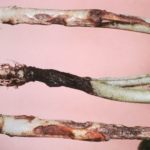
Rhizoctonia
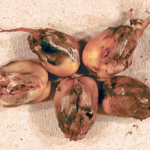
Seed decay
Seedling diseases can be caused by several common fungi, such as Pythium, Fusarium and Rhizoctonia. A number of other fungi could also be involved, all of which cause similar symptoms. Nematodes, bacteria and insects can also play a major role in seedling diseases. The results of infection can include:
- Rotting seeds before germination
- Seeds that germinate but fail to emerge
- Seeds that germinate and emerge but die shortly thereafter
Because so many of the seedling disease symptoms are similar, it is often difficult to diagnose a specific disease. However, most management options are essentially the same for nearly all corn and soybean seedling diseases.
Three basic management options
There are three basic management options that can help decrease your chances of having seedling diseases reduce your corn and soybean stands. Since diseases are difficult, if not impossible, to control once they develop, the best methods of control are preventative. Your options for managing seedling diseases include chemical, cultural or genetic controls.
- CHEMICAL
Chemical control usually is thought of as using a seed-applied fungicide; however, there are a few fungicides that are now labeled for in-furrow treatment, as well. Corn seed typically includes a fungicide treatment, while soybeans can be ordered with a seed treatment applied prior to packaging, can be applied at some dealers or can be applied in the field as the planter is filled. When treated, most seed has more than one fungicide applied that can protect against some of the pathogens that cause seedling diseases. However, under extended periods of poor environmental conditions or severe pathogen pressure, infections may still occur. Keep in mind: Many seed treatments are only effective for the first 30 days after planting.
- CULTURAL
There are several options when it comes to cultural control. Keep in mind that most, if not all, of these require patience (which is probably the best and most difficult one to apply):
- Soil temperatures for planting – above 50°F for corn and 55°F for soybeans, and the forecast would indicate warming soil temps.
- Moisture and tiling – While you want to plant seed in to some moisture, sometimes there can be too much. Tiling can help reduce areas that are very saturated, while sometimes waiting for the sun and a little time can help other areas of the field dry.
- Tillage – may help reduce the population of the fungal pathogen that can over-winter on decaying plant residue. Planting into a compacted seed bed, not getting good seed-to-soil contact and poor seed depth can delay emergence.
- Crop rotation – can help reduce some diseases, but most fungi can also infect corn, soybeans, alfalfa, wheat and sugar beets, just to name a few.
- GENETIC
Genetic resistance today is only available for Phytophthora in soybeans. Unfortunately, there is no genetic resistance available for corn seedling diseases.
Contact us!
If you need any help in determining the cause of any reduced, diseased or uneven stands, we are here to help. Contact your local dealer or District Sales Manager and they will help get you in touch with the Producers Hybrids Sales Agronomist in your area.